
Manage Your Debt - Let's Explore Your Options
GET STARTED NOWFlash Sales and FOMO: Why Black Friday Makes Us Spend More — And How to Stop Holiday Deals from Turning into Debt
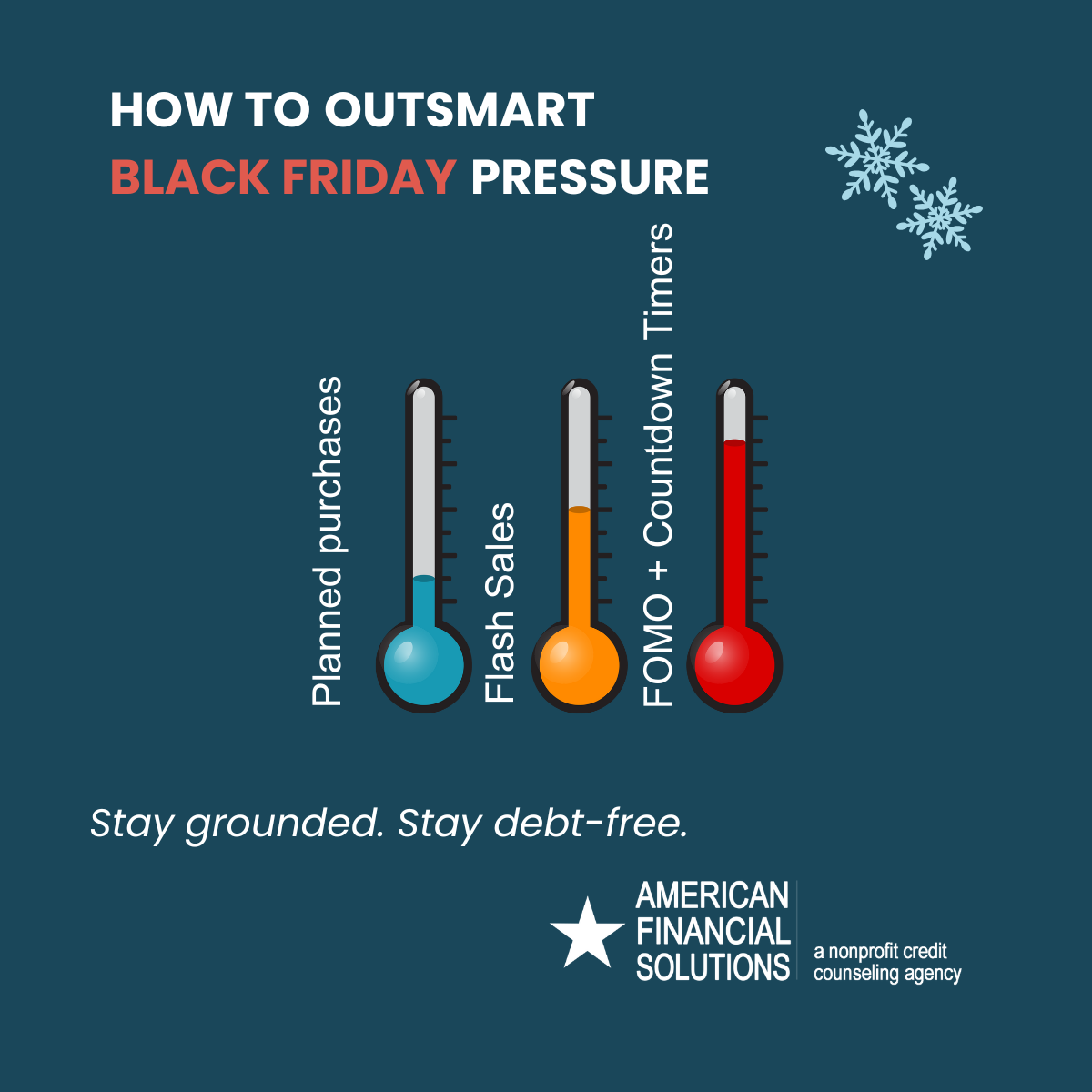
Black Friday arrives with excitement, bright banners, countdown timers, and the promise of “can’t-miss deals.” For many people, it can feel like a chance to finally buy things they’ve been waiting for all year. But behind the excitement, retailers use powerful psychological strategies — especially FOMO (the fear of missing out) to push us toward purchases we didn’t plan for. That fear-driven pressure can quickly lead to overspending and, for many households, new debt that lingers long after the holiday season ends.
This isn’t about blaming shoppers. It’s about understanding the environment we’re navigating, especially as many families are already juggling higher prices, existing debt, and financial stress. When budgets are tight, Black Friday’s urgency can make it harder to make decisions aligned with our long-term goals.
How Retailers Create FOMO — And Why It Works
Retailers rely on a playbook rooted in human behavior:
- Scarcity (“Only 3 left!”) - When something seems limited, our brain wants it more — even if we didn’t want it before.
- Urgency (“Sale ends at midnight!”) -
Countdown timers make us feel like we have to act immediately, before we have time to think.
- Social Proof (“Thousands already sold!”) Seeing that “everyone else” is buying creates pressure to join in.
- Doorbusters and Anchoring - A $200 item marked down to $119 feels like we’re saving money — even if it wasn’t something we needed.
When “Deals” Aren’t Really Deals
Not every advertised “sale” is what it appears to be. Research by Consumers’ Checkbook found that many retailers markup regular prices just to show discounted ones that aren’t meaningful savings. In other words: you might be buying a “discounted” item that was never truly cheaper. That makes impulse purchases feel like smart choices — while they quietly chip away at your financial health.
When a “Deal” Becomes Debt
A $75 Black Friday impulse purchase may feel harmless in the moment, but on a high-interest credit card, that “deal” can grow to $100 or more if it isn’t paid off quickly. Multiply that by several holiday purchases, and suddenly January becomes more stressful than December.
Debt also steals from future possibilities: buying a car, renting an apartment, saving for emergencies, or building credit. Even small balances slow progress.
How to Stay Grounded and Protect Your Goals
You don’t have to skip Black Friday entirely. The goal is intentional spending and protecting your financial well-being.
- Make a list before you shop — and stick to it.
- Set a spending limit for the season. Choose a number that won’t create stress in January.
- Press pause. Wait 24 hours before buying anything not on your list.
- Watch out for Buy-Now-Pay-Later apps. They make purchases feel smaller, but payments stack up quickly.
- Redirect what you don’t spend. Each avoided impulse purchase can become $10, $20, or $50 toward paying down debt.
Give Yourself a Better Gift This Year
This holiday season, give yourself the gift of financial peace. You deserve a future without the weight of debt. Staying mindful, avoiding pressure tactics, and choosing what aligns with your values can help you start the new year stronger — not deeper in debt. It’s not about missing out on deals; it’s about not missing out on your goals.
And if you’re already feeling overwhelmed by debt or struggling to manage multiple payments, you don’t have to handle it alone. Our certified credit counselors are here to help you understand your options, reduce stress, and build a clear, manageable path forward.
Reach out anytime — we’re here to support you.
Published Nov 25, 2025.